Showing posts with label genetic. Show all posts

Wednesday, January 29, 2014

Getting More from Your Genetic Testing Results: Y-DNA Mapping

   Y-DNA testing has only been around for about 15 years and can tell us about our direct paternal ancestry.  It is sometimes criticized for only being able to tell us about a small portion of our genetic history.  I think the critics forget that our mothers have fathers and there are a number of ways to obtain male test subjects to expand Y results across the entire family tree.  In the last few years, there has been a brighter spotlight on autosomal testing and its ability to test a larger portion of our genes.  This may have diverted research attention.  Relatively speaking, y-DNA is still in its infancy and there is much more to be learned.  In addition to our deep ancestral origins dating back over 10,000 years, we should be able to identify our old world homeland and our nomadic ancestor’s migration routes.  It is meaningful to know not only where they lived, but also when they lived to give us clues to their part in history.

   My closest genetic cousins and I share a common ancestor over 1,100 years ago.  With that many years between us, I didn’t spend a lot of time looking for a common surname.  For the last four years, I’ve been working with y-DNA to determine what can be learned beyond cousin matches and distant origins.  I originally tested with the Genographic Project and then transferred my results to Family Tree DNA for an upgrade.  In the time since getting my upgrade to 67 markers, I have received only one match.  This is due to my haplotype being somewhat rare and not a reflection of Family Tree DNA’s ability to provide matches.  I learned that I was part of haplogroup G, from the Caucasus Mountains.   I didn’t learn anything about how the ancestors of my Italian family traveled from Western Asia to Italy.
   I needed to find more cousin matches than the client base that had tested with FTDNA.  Ancestry.com allowed me to enter my y-DNA markers into their DNA section.  I compared my haplotype against the database at Sorenson Molecular (SMGF.org).  I also tried Genebase.com and any other place I could find.  I didn’t locate any cousins.  I did get a good education on what is out there for DNA companies and services.  FTDNA allowed me to transfer my results to Ysearch.org, a free public DNA matching service that they provide.  Ysearch provided much more flexibility.  Where FTDNA would only show me matches with a genetic distance of seven or less, Ysearch allowed me to select the genetic distance.  Without the genetic distance restrictions, Ysearch showed me hundreds of very distantly related cousins.  I’d rather have distant than none.  FTDNA is not trying to be difficult.  They are trying to be realistic and keep matches within genealogical timeframes.  I just needed more.
  While not used consistently, one of the best features of Ysearch is its ability to present the most distant known paternal ancestor (MDKPA) and their origin.  So now, I had cousins and their ancestral origins.  The greater the genetic distance, the closer I got to the Caucasus Mountains.  I mapped my closest cousins and their pushpins created a line from the Alps to the North Sea, directly along the Rhine River.  This was a pattern.  I like patterns.  There is usually a scientific reason for a pattern.

Figure 1 – Mapping Ancestral Origins

   I’ve run a few hundred genetic mapping exercises on the majority of Y haplogroups.  The patterns are consistent.  Our ancestors traveled along rivers and coastlines.  They skirted mountain ranges and crossed bodies of water.  There is always a flow to the patterns, but the science and the why were still missing.  I’ve always been interested in early Eurasian history and have tried to associate it to the patterns in the maps that I generated.  Some maps have places and dates that connect well to notable events.  Other maps raise more questions than answers.  Genetic tests and history alone were not making a complete picture.  I needed to add population genetics, migration models, anthropology and evolutionary biology to my knowledge base.
   Take any  two people on the planet, compare their DNA and you can calculate, approximately, how far back in time their common ancestor lived – time to most recent common ancestor (TMRCA).  Our ancestors were nomadic and traveled about 25 to 30 km per generation or roughly 1 km/year on average.  If a common ancestor lived 300 years ago, then that person’s descendants may have migrated 300 km from the geographic origin of that ancestor.  In the figure below, d1 and d2 represent the origins of two known y-DNA genetic records.  The circles show the distance their ancestors may have migrated.  The intersections are the potential locations of their common ancestor.  In this case, there are two intersections, a1 and a2.  More y-DNA records are required to figure out which intersection is correct.

Figure 2 – Distance to Most Recent Common Ancestor (Bilateration)

   The genetic analysis that I have developed is similar to a navigation technique.  Radio navigation uses two or more beacons with known locations and a measurement of the time it takes to receive a signal from each.  The time is converted to a distance.  A current location can then be identified.  In my method, the “beacons” are the ancestral geographic origins. The “signal” is the TMRCA, measured in years, converted to a distance by multiplying the average migration rate – creating a distance to most recent common ancestor (DMRCA).  A location for the common ancestor can then be figured out by looking at the intersections.  Multiple y-DNA records are needed to determine migration direction and geographic origins of a related set of genetic cousins.  The science is starting to take shape.
  I am G-Z726, which is a subgroup of G-Z725.  At Ysearch or on an FTDNA project you may still see an older naming convention - G2a3b.  As an example, let’s look at 18 of my closest genetic cousins – haplogroup G-Z725, (DYS388=13).  TMRCA data is generated using Dean McGee’s Y-Utility.  The output is turned into a phylogenetic tree and the DMRCA is calculated. 

Figure 3 - Phylogenetic Tree - G-Z725 Sample

Each distance is used to draw a circle that represents the migration range of that ancestral line.  My range (MAG) and the range of my next closest cousin on the tree (BAB) create two intersections on the map.  One point is in Africa and the other is in Eastern Europe.  

Figure 4 - Intersection of MAG and BAB

By adding the range of cousin EBE, the correct intersection representing common ancestor 7 (CA7) is identified.  Pairs of records are mapped to continue the analysis.

Figure 5 - Intersection of BIR and RUF

BIR and RUF are another example and they identify common ancestor CA3.  Each record is added until all common ancestors are identified. 

Figure 6 - Common Ancestors Mapped

Connections are drawn based on the phylogenetic tree.
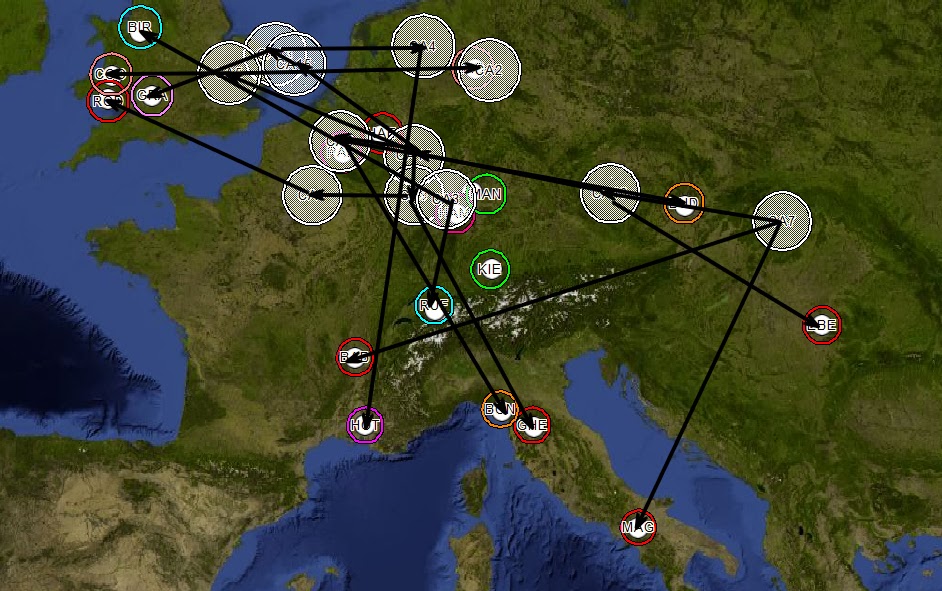
Figure 7 - Phylogenetic Tree Superimposed

Then for simplification, the migration flow is generalized.  Based on the phylogenetic analysis, common ancestor 7 (CA7) is the most distant common ancestor (MDCA) of samples in this example.  The western migration flow has a slight correlation to the Danube River and the North/South migrations have a strong correlation to the Rhine River.  Early attempts at direct mapping of genetic data (Fig. 1) gave similar results based on TMRCA alone.  There was no corroborating evidence of directionality or definitive proof of MDCA.  

Figure 8 - Generalized Migration Flow - G-Z725

   The new methodology that I have developed shows ancestral origins and migration direction.  I call this method biogeographical multilateration (BGM).  It is the geographical distribution of y-DNA data based on multiple distance measurements from reference positions. 
   This method also has the potential to identify the location of a DNA sample when the origin is unknown. For one of my clients, I identified that his paternal ancestor that had immigrated to the United States may have anglicized their name.  The previous name was German and that surname was found predominantly in central Germany.  Applying biogeographical multilateration to my client’s y-DNA results, while leaving the origin as an unknown, indicated a continental European origin within 200km of the city with the highest surname density.
   In the referenced paper, the example haplogroup, I-L22, has an approximate correlation to the Norse/Viking invasions of Britain and identifies a Frisian coast staging area.

Figure 9 - Generalized Migration Flow - I-L22

  We are still in the infancy of what we can learn from y-DNA.  My BGM analysis has room for refinement.  There is enough science out there to help us.  New research is being done at the aggregate population level.  We can apply elements of that research to the individual level.  Biogeographical multilateration has the potential to fill the gap in our knowledge between genealogical records and deep haplogroup roots.  This new tool can give us old world ancestral origins, migration flow and historical timeframes.
   I needed to learn more about my DNA and my origins.  The big testing companies haven’t filled the knowledge gaps that exist.  They are in the business of providing quality test results.  The analysis and tool creation is falling on the shoulders of “citizen scientists”.  Sometimes, you just have to do it yourself.

Reference:

Maglio, MR (2014)  Y-Chromosome Haplotype Origins via Biogeographical Multilateration (Link)

Monday, March 25, 2013

The DNA of Thomas Jefferson: [Insert Shocking Title Here]

   I’ve been creative with the titles of my articles in the past. It is the first thing people see and it better be eye catching. It’s been said that I'm ‘intentionally provocative’. I enjoy writing about topics that make people think. I draw the line at faulty logic. Many times, I'll draw conclusions from circumstantial evidence, but I always strive for a logical argument.

   Thomas Jefferson was part of the rare y-DNA haplogroup T (formerly K2) and much has been written about his genetics. Not everything written has been logical in its assumptions. Sometimes the story lines misinterpret the underlying science.


“Was Thomas Jefferson the first Jewish President?”

“Thomas Jefferson was Phoenician.”

“If Jefferson was Phoenician, then Charlemagne was also.”

“Thomas Jefferson could have recent origins in the Middle East.”

“Thomas Jefferson’s DNA traced back to Egypt.”

   In these situations the writers took a single data point and ran with it out of context.

   When we look at Jefferson’s DNA and compare it to available records, we only get a handful of matches that don’t tell a complete story. Let’s look at the first headline – was Jefferson Jewish? He didn’t practice Judaism and he wasn’t raised Jewish. He does have one genetic cousin who is a Moroccan Jew, but you have to go back about 2,000 years to find a common ancestor. While haplogroup T does have origins in the Middle-East, I wouldn’t say that it is definitely a Jewish haplogroup. If Jefferson were J1b2, there would be a stronger case tying him to the kohanim Jewish paternal lines. Jefferson also has a Belgian genetic cousin. Perhaps the headline should have been – Was Thomas Jefferson the first Belgian President? Not that exciting. Probably wouldn’t have sold very well.

   Thomas Jefferson was a Phoenician! There are many articles attributing this statement to Spencer Wells as part of his In Search of Adam program in 2005. I can’t find one quote that actual has Wells saying this. In fact in 2008 Wells argued that the Phoenicians were haplogroup J2. Jefferson’s haplogroup T is found in the same places and at the same times as the Phoenician Mediterranean colonies. This may indicate that Jefferson’s ancestors travelled with the Phoenicians as a peer or as a slave. I don’t think that ethnicity by association works.

   If Jefferson was a Phoenician, then so was Charlemagne. This is just plain and simple poor logic and a misunderstanding of genetics. As I mentioned, it doesn’t appear that haplogroup T is Phoenician. While Jefferson may be a descendant of Charlemagne, he is not a direct male descendant. You really need to be a direct male descendant to prove that an ancestor has the same y-DNA. One sample would never be enough to prove Charlemagne’s DNA. Multiple descendant samples and very strong genealogies are required to come close to determining an ancestor’s DNA. You never know where a non-paternal event may pop up.

   Could Jefferson have recent origins in the Middle East? This writer never actually defines recent. We are left to wonder if the Jeffersons lied on their Naturalization applications. Based on ‘time to most recent common ancestor’ calculations, I’d put Jefferson’s ancestors in the Middle East about 3,000 years ago. I guess that’s fairly recent compared to the age of the universe.

   Jefferson’s DNA traced to Egypt! One record match does not make an origin. That one Egyptian genetic cousin actually clusters better with other Moroccan records. This could indicate a back migration from Morocco to Egypt for that one person. A rule of thumb when determining origins is to find clusters of records. Jefferson does have a cluster on either side of the Strait of Gibraltar. This provides a strong argument that Jefferson’s ancestors came through that region and perhaps loitered there for a while. That doesn’t make it his origin.

   How should we define Jefferson’s origins? It is important to define origins with context. Where in Britain did the Jeffersons come from? One biographer puts Jefferson’s family origins in Wales. Jefferson’s closest British genetic cousin comes from Yorkshire and the Jefferson surname has the highest distribution in Yorkshire. We are still talking about a single point of reference, so I won’t fall into the same trap and pronounce Thomas Jefferson a Yorkie. I can say that it appears that the Jeffersons were British and that the family had been in Britain for at least a 1,000 years. There’s just not enough data to be more certain.

   Jefferson’s tribal DNA does leave a sparse trail of breadcrumbs across Europe in the 1,500 to 2,000 years ago range. There are genetic matches that become increasingly more distant in Belgium, France and Spain. We could connect-the-dots and we probably wouldn’t be far off the migration path. For Jefferson’s European origins, we might say his ancestors were Iberian. If we go back another 500 years, the picture changes to a culture that traveled the Mediterranean. The genetic breadcrumbs are in Morocco, Sicily, Cyprus, Egypt and Turkey. We could talk about Jefferson’s haplogroup T origins. A cluster of data suggests a southern Arabian Peninsula origin about 8,000 years ago.


   If we continue backward in time, Jefferson’s ancestors came from East Africa just like everyone else on the planet. Which ‘origin’ you choose for Jefferson is completely up to your specific agenda. I use genetic genealogy to get a better understanding of the world that we live in and the things we have in common as one species. We may learn through DNA that our ancestors sacked Rome or pillaged the coast of England. That’s history, that’s fascinating, but that’s not who we are today. Unless you personally choose to embrace that history. Jefferson’s distant ancestors may have been Jewish, Phoenician or Egyptian, but that’s not who he was.

   We shouldn’t persecute for the sins of our ancestors or sit on the laurels of their accomplishments. We need to keep moving forward in a positive direction.

#gDNA


Friday, February 15, 2013

Get Your DNA to the Top of the Charts


Deep Into DNA*

Show me your DNA family tree. You don’t have one? This year, set a new resolution to build your DNA tree. You have a great family tree with names, dates and locations. I will be using fan charts to describe a variety of family trees including traditional, nationality, genetic and ethnic.


DNA gives us the ability to view beyond our nationalities to our cultural origins. You may have English ancestry on paper, genetically you might really be Celtic, Norman, Norse or Saxon. All nations are culturally and genetically diverse.

...continued at The In-Depth Genealogist with a free membership.


*The Deep Into DNA article series is published each month in the new Going In-Depth
digital genealogy magazine presented by The In-Depth Genealogist.

#gDNA

Saturday, February 2, 2013

Are You Special?

Deep Into DNA*

We are all special in our own quirky ways. How much does your DNA play a part in who you are? Perhaps you’re not who you think you are. If you’ve received DNA results from one of the major tests, y-DNA, mitochondrial DNA or autosomal DNA, you might already have a glimpse into what makes you special.


Beyond the big tests that give you distant paternal or maternal ancestry or a pie chart of your ethnic mix, there are many specific tests. What percent Neanderthal are you? There’s a test for that. The jury is still out on whether your Neanderthal genes are from a direct descendant or just shared from a common ancestor. When we start talking about what percent chimpanzee you are (yes, there’s a test for that) we are definitely talking about a common ancestor going back seven million years. Just to be clear, we are not descended from chimpanzees or any other living ape, but as cousins, we do share DNA.

...continued at The In-Depth Genealogist with a free membership.


*The Deep Into DNA article series is published each month in The In-Depth Genealogist Newsletter and will demystify genetic genealogy and make sense out of DNA testing terminology. Each month we will talk about the types of tests available from major labs and show relevant examples on how to use DNA in your genealogy research.

#gDNA

Saturday, December 22, 2012

Testing All Your Genes

Deep Into DNA*

   We all have 46 chromosomes, 23 from mom and 23 from dad. Two of those chromosomes are the sexy kind, X and Y. We’ll ignore those for now. The other 44 chromosomes are your autosomes. Autosomal testing has become available only within the last few years and has become a very popular choice. It offers the broadest range of results, including cousin matches, ethnic proportions and health indicators.


...continued at The In-Depth Genealogist with a free membership.


*The Deep Into DNA article series is published each month in The In-Depth Genealogist Newsletter and will demystify genetic genealogy and make sense out of DNA testing terminology. Each month we will talk about the types of tests available from major labs and show relevant examples on how to use DNA in your genealogy research.

#gDNA

Monday, November 5, 2012

Your Mother's Mother

Deep Into DNA*

Your mother’s ancestry can be extremely challenging. Most of us live in a patrilineal society. The wife and the children take the surname of the husband. History shows us that recording the maiden name of the wife was often an afterthought. We have all tried traditional genealogy for our mother’s line. Some of us can go back a couple of generations and have hit brick walls. Some of us have researched a dozen generations. Mitochondrial DNA testing can aid a genealogist in discovering those lost surnames and validating your research.

Two months ago, I wrote about y-DNA and its use in tracing your paternal line. Mitochondrial DNA testing looks at your maternal line. There are many similarities and just as many differences between the two tests.

...continued at The In-Depth Genealogist with a free membership.

*The Deep Into DNA article series is published each month in The In-Depth Genealogist Newsletter and will demystify genetic genealogy and make sense out of DNA testing terminology. Each month we will talk about the types of tests available from major labs and show relevant examples on how to use DNA in your genealogy research.

#gDNA

Friday, September 7, 2012

Your Father's Father


Deep Into DNA*


   Raise your hand if you’d like to know more about your surname and your father’s ancestry.  I’m raising mine!

   Most of us live in a patrilineal society.  The wife and the children take the surname of the husband.  We can’t help but to associate with our father’s family, his clan.  The males in the family will inherit the Y chromosome virtually unchanged, though genetically, we can only attribute a small fraction of our overall DNA to that patrilineal line.  Psychologically though, 50% of our ethnic identity comes from dad.   


   We have all tried traditional genealogy for our father’s line.  Some of us go back a couple of generations and some of us have researched a dozen generations.  A few of us are adopted and know nothing about our paternity.  Y-DNA testing has benefits that aid a genealogist in all these situations...

...continued at The In-Depth Genealogist with a free membership.

*The Deep Into DNA article series is published each month in The In-Depth Genealogist Newsletter and will demystify genetic genealogy and make sense out of DNA testing terminology.  Each month we will talk about the types of tests available from major labs and show relevant examples on how to use DNA in your genealogy research.

#gDNA

Thursday, August 9, 2012

An Imperfect World

Deep Into DNA*


   Anthropology is the study of humans.  Cultural anthropology is a branch that studies the knowledge, beliefs, art, morals, laws and customs of the world’s people.  I include genealogy, the study of the generations, as a very focused branch of cultural anthropology, the study of your own heritage. 


   For centuries anthropology relied on the study of languages and the discovery of artifacts to build a model of human history.  Today and for more than a decade, anthropologists have used DNA to support their arguments.  This as a tripod of evidence and adds balance.  Language, artifacts and DNA give anthropology three legs of support.


   As genealogists, we rely on oral tradition and historical records.  With DNA for genealogy, we can build our own tripod of evidence...


...continued at The In-Depth Genealogist with a free membership.


*The Deep Into DNA article series is published each month in The In-Depth Genealogist Newsletter and will demystify genetic genealogy and make sense out of DNA testing terminology.  Each month we will talk about the types of tests available from major labs and show relevant examples on how to use DNA in your genealogy research.

#gDNA

Monday, August 6, 2012

The Library of You

Deep Into DNA*

   Imagine getting a letter that a distant relative has passed away and that you are invited to the family home. There is a gift waiting for you there. When you arrive, you are handed a skeleton key with a little tag. Handwritten on the tag is your name in faded, old ink. The caretaker tells you that the key fits the door to one of the rooms in the house and you should feel free to look for it.


   As you wander the old home, you see priceless antiques and old photos.  In the study, there are volumes of genealogies of surnames both recognizable and foreign.  The entire place is a treasure trove of information and memorabilia.  You would be happy with even the smallest of gifts...


...continued at The In-Depth Genealogist with a free membership.


*The Deep Into DNA article series is published each month in The In-Depth Genealogist Newsletter and will demystify genetic genealogy and make sense out of DNA testing terminology.  Each month we will talk about the types of tests available from major labs and show relevant examples on how to use DNA in your genealogy research.

#gDNA