Tuesday, May 22, 2012

A Genealogy Twofer


   Two family history articles for the price of one (still free).

   Florence Jane Ovens was born in the London Borough of Wandsworth in 1872.  Along with her father, step-mother and brother, she emigrated to the United States around 1880.  She graduated from the Hyannis State Normal School (later the Hyannis State Teachers College) in Hyannis, Massachusetts.  By 1900, she was teaching in the Falmouth school system.  She also taught in the Somerset, MA, Clinton, MA, Chester, NH, and York, ME schools between 1900 and 1920.
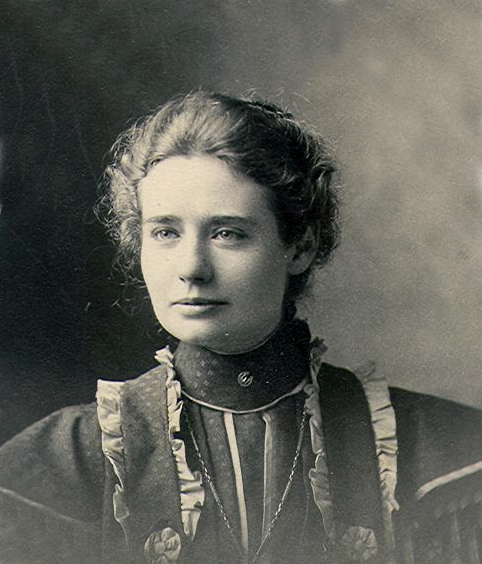
Florence Jane Ovens (1872-1955)

   In the 1920s, Florence moved to New York City and in 1923 filed for naturalization.  By 1928, she had met Elizabeth ‘Bessie’ Locke.  Until the time of Bessie’s death in 1952, they were constant companions.  Bessie Locke was the Founder and Director of the National Kindergarten Association and Florence became the Executive Secretary and Editor.  Their goal was to bring public kindergarten to all the nation’s children at a time when only 1 in 10 children received pre-elementary education.

   At the invitation of President Roosevelt’s Advisory Committee on Education, Bessie and Florence wrote The Kindergarten in the United States in 1937.  They were never able to get their kindergarten bill through Congress.  Instead, they focused their energy at the state level.  In their lifetime, they personally helped create over 3,000 kindergartens.

   I’m writing about Florence because she is my wife’s great aunt. Florence was also instrumental in helping me figure out how my wife’s great-grandfather arrived here from England.

   We all hit various size brick walls when we research.  No amount of research experience can ever eliminate running into a brick wall.  I will usually turn to other genealogists and ask how they might have gotten around my particular type of roadblock.

   I was able to find my wife’s great-grandfather, William J Ovens, in England in the 1871 census and then again in the 1885 Dedham, MA city directory.  I could find nothing in between.  William did become a citizen, but his naturalization papers shed no light on his arrival.  Like a physical brick wall, if you follow it sideways far enough you can usually get around it.  Whenever possible, I start searching sideways, widening my research by looking at sibling, cousins and children.

   While looking at William’s daughter, Florence Jane Ovens, I found an amazing woman dedicated to education and I found her naturalization papers.  Her papers told a much more illuminating story than her father’s did.  The family had crossed from Canada after living in Montreal for nearly a year.

   I use Ancestry.com.  The have a very large collection of records and even the best database query never returned a result for a Canadian border crossing.   Like many companies with an international presence, Ancestry will help narrow the volume of data presented to you by giving you the localized information first.  If you are on the US site, you get US records first.  If you are on the UK site, you get the UK records first.  Depending on your subscription, you may not even see beyond the local data.  I have the international version, which should allow me to see the Canadian records.  From the US site, those Canadian records weren’t rising to the top.  I logged into the Canadian site – www.Ancestry.ca.  Did you know you could do that?  There are eight international versions, including US, UK, Canada, Australia, Germany, Italy, France and Sweden.  By logging into the alternate site, the records I was looking for rose to the top.  After changing my point of view, I now had passenger records and border crossings for the Ovens family.  Thank you Florence.

   Ancestry is not the only company that has different sites.  Google has a unique site for nearly every country.  Like Ancestry, Google will push the local results to the top of a search.  If you are doing any kind of foreign genealogy research, you need to try this.  Create a search on Google.com, then do the exact same search on Google.it or Google.de or Google.co.jp.  Naturally, it helps to know the language or to use the Google Chrome browser and let it translate for you.

   Sometimes you need to change your point of view.  Get a fresh perspective.  Clear a new path.  [Insert your metaphor here]

   Remember to research sideways when you hit a brick wall.  There are many great stories from our extended family members.  One of those folk may hold the key to what you are looking for.


Tuesday, May 15, 2012

What's Happening: IDG & MGC

I have two great things to announce today.


My first column about DNA was published today in The In-Depth Genealogist.  You can subscribe to the newsletter here - In-Depth.  You can read my column here - The Library of You.

The 2012 Massachusetts Genealogical Council Annual Meeting & Seminar registration is now available here - MGC.  I will be presenting the topic - Armenian Americans: Diaspora, Migration & Genealogy.

Wednesday, May 2, 2012

The Autosomal Match Game


   Don’t get me wrong.  Autosomal DNA testing is a very valuable tool.  A match has the possibility of breaking through some very significant genealogical brick walls.  It’s important to understand what a match means or doesn’t mean.

   In a nutshell, we all have 46 chromosomes, 23 from mom and 23 from dad.  Two of those chromosomes are the sexy kind, X and Y.  We’ll ignore those for now.  In an autosomal test, the DNA sequences in your chromosomes are compared against everyone in the testing company’s database.  The goal is to find long matching sequences.  Depending on how long the sequences are and the total number of matching sequences, a calculation predicts the cousin relationship.

   Now here is where things get dicey…

   Take two full siblings (not twins).  At first glance, you might think that genetically they are a 100% match.  Dad gives these two siblings 23 chromosomes each, half of his DNA.  It’s not necessarily the same 23 chromosomes.  Mom does the same.    Let’s look at the two extremes.

   Imagine mom’s DNA as two chunks of 23 chromosomes each – A & B.  Dad has two chunks also – C & D.  Mom gives each child chunk A and dad gives each chunk D.  Both children will have A & D and will be exact genetic matches.


   What if mom gave one child A and one child B.  Then dad gave one child C and one child D.  The full siblings would be A & C and B & D, showing no match at all.  The truth is that a full sibling match will exist on a continuum somewhere in between.


   The probability that a sibling match would be 0% or 100% is extremely low.  Cousin matches are a different story.  In a perfect world, two 1st cousins could share 25% of their DNA.  Two 2nd cousins might have 1/8, 3rd cousins – 1/16, 4th – 1/32 and 5th cousins – 1/64 – a little more than 1% shared DNA.  The possibility of two cousins not sharing DNA or not sharing a long enough sequence to make a match gets higher.

   In my family, two Scottish brothers married two German cousins.  I am the grandson from one of these unions.  I have a cousin who is the grandson from the other marriage.  We are both 2nd cousins and 3rd cousins.  It is possible that we share 1/8 plus 1/16 for a total of 3/16th.  That much shared DNA could be reported on a test as being 1st cousins.

   The autosomal match game is not a perfect world.  If you don’t get a match and you think you should have, then test different cousins.   Adding more DNA samples could give a new set of results.  If you do get matches, the degree of the relationship can help set a starting point in looking for that common ancestor.

   DNA is just one of many tools we have as genealogists.  In the case of autosomal testing, DNA is just the beginning.  It will take traditional genealogy to get you to the prize.

#gDNA

Monday, April 30, 2012

Social Genealogy: The Webinar

If you missed my talk on Social Genealogy this month, you can now see the recorded webinar.

http://vimeo.com/40376335

Presented at the April 2012 Middlesex Chapter meeting of the Massachusetts Society of Genealogsts, Inc.

I look at social media tools and how to use them like a genealogy detective. Using social media and building a strong network are a valuable part of your genealogy toolbox.

Thursday, April 5, 2012

Social Genealogy: Finding Your Cousins

   It's not what you know and it's not who you know, it's how big is your network.


   Join us on April 14th at 1:30 at the Framingham Public Library as the Massachusetts Society of Genealogists host and I present Social Genealogy: Finding Your Cousins.

   We will look at social media tools and how to use them like a genealogy detective.  Using social media and building a strong network are a valuable part of your genealogy toolbox.

   If you can't make it out to Framingham then join us for the free live webinar.  Register here.

   Let's get social!

Thursday, March 29, 2012

Maglio: The Surname DNA Project


   Have you had your DNA tested?  Did you get many close matches or like me did you get none?  I have no matches with the same surname.  The closest matches to my Italian yDNA were some Welsh guys.  If the Welsh connection were a few generations back, I’d be worried about my paternal line.  My closest DNA connections are 2000 to 3000 years ago.  This really doesn’t help me find my Italian roots.


   This doesn’t mean that my DNA testing has been in vain.  I’ve learned a lot about my origins.  I’ve used the DNA to trace my tribal migration from the Caucasus Mountains, across Europe and down the boot of Italy.  There is even a strong argument that a connection exists to the Etruscan culture.

   Since I am the first Maglio to be tested on the Family Tree DNA site, I guess it is up to me to start a project to gather all of the distantly related Maglios together.

   For all of you who have been tested and have no close connections it’s time for us to take the bull by the horns.  Let’s be the leaders.  Let’s create our own projects.  So, I’m creating a Maglio surname project on Family Tree DNA.  They make it easy and it’s free.  It’s free because they hope to get revenue as you invite other folks with the same surname to be tested.  FTDNA does offer discounted tests to project members.  It’s a win-win.

   “If you build it, they will come.”  Just because I start a project doesn’t mean that the Maglios will come flocking.  I’m going to need to get the message out.  I’m going to have to find them.  Like any relationship, it will take some wooing.

   Rather than just contacting random Maglios and asking for DNA, I have set up a Facebook group called Maglio Famiglia.  I plan to invite every Maglio on Facebook.  This will give us an opportunity to chat, compare stories and build connections.

   If anyone out there has been through this already, tell me about your experience building either a Facebook or Family Tree DNA surname project.

Tuesday, March 20, 2012

TMRCA: DNA and the 4th Dimension

Time to Most Recent Common Ancestor


TMRCA answers the question, ‘OK, you and I are related. How far back in time do we have to go to find the connection?’


Take any two organisms, two mushrooms, two rabbits or two humans and compare their DNA. If you know how the DNA is different and you know the rate of mutation for the differences then you can calculate how far back in time they have a common ancestor.

In this mini-webinar I will explore how close or distantly in time various DNA tests will take you and various tools for calculating and visualizing TMRCA data.

You can find the webinar on my YouTube page.

#gDNA

Thursday, March 15, 2012

Mapping Your Tribe


If I asked you where your ancestors were last year or 100 years ago, you could probably tell me.  If you have a yDNA or mtDNA test in your hands, you could tell me where your ancestors were 30,000 years ago.


Where were your ancestors 1000 or 2000 years ago?  What events did they witness?  What history did they make?

Join me as we combine DNA and history to Map Your Tribe.

Tuesday, March 27th at 7pm
22 Elm St, Gardner MA – American Legion Post #129

Where did you come from? 

#gDNA

Tuesday, March 13, 2012

What’s in My gDNA Toolbox


   If I were talking about my regular genealogy toolbox, I would be listing links to all the great websites with digital records (e.g. FamilySearch).  I would also talk about great repositories like NARA, BPL or the Mass Archives.  Or, I would mention tips and techniques like Nearest Neighbor and the Hidden Treasures in old photos.


   Now that we are adding DNA as a tool for genealogy, we have to pack a new toolbox.

The Databases – record sources to compare your DNA against

· Ysearch.org – Y-DNA database
· Mitosearch.org – mtDNA database
· FTDNA.com – DNA Project database
· WorldFamilies.net – DNA Project database
· SMGF.org – DNA Project database

The Testing Companies – many different testing companies that are not all equal – do your homework

· FTDNA.com – DNA testing  (my favorite)
· 23andMe.com – DNA testing
· SMGF.org – DNA testing
· Ancestry.com – DNA testing
· GeneTree.com - DNA testing

Sources of gDNA Knowledge – There are many areas of genetic genealogy that are open for interpretation.  Read everything and come to your own conclusions.

· ISoGG.org – Advocates for the use of genetics as a tool for genealogical research
· Wikipedia  - Haplogroup details
· nationalgeographic.com/genographic

Analysis Tools – DNA results love to be compared and analyzed

· hprg.com/hapest5/index.html – Whit Athey’s Haplogroup predictor
· mymcgee.com/tools/ - Dean McGee’s Y-DNA comparison tools
· www.math.mun.ca/~dapike/FF23utils/ - David Pike’s autosomal comparison tools
· http://gedmatch.com/ - Autosomal comparison tools
· PHYLIP – phylogenetic tree creation

DNA Data Management – you need to organize and manage your DNA records

· Legacy Family Tree – supports DNA records (the one I use)
· Family Tree Maker, RootsMagic, Ancestral Quest and The Master Genealogist – supports DNA
· Excel – spreadsheet tools
Misc
· Google Maps – User defined maps – you never know when you might want to build your own custom map

   This is hardly an exhaustive list.  I use most of these tools on a weekly basis.  I’m always looking for new tools (or creating ones that don’t exist).

   What's in your toolbox?  Let me know what tools you are using.

#gDNA

Monday, March 5, 2012

#genealogy + #DNA = #gDNA : Tweeting about the generations


   I use Twitter.  I tweet.  Maybe I’m a twit.


   I don’t use Twitter as it was designed to be used.  Twitter started as a microblogging service (a web based personal journal in the form of a 140-character posting).  The intent was to communicate – “What are you doing right now?”  The last thing I want to know is the mundane activity anyone is doing right now.

   The best (or worst) thing about new technology is that folks will figure new and innovative ways to use it that its creators never imagined.

   I’m not going to take credit for being innovative.  I learned how to use Twitter from some folks that have been tweeting for a long time.  Rather than talking about what I’m eating or the first fluff that enters my brain, I use Twitter to publicize and promote my genealogy.

   Like Facebook, it is about making connections.  In Facebook, once you have friended someone it becomes a two-way street of information sharing.  Twitter is a little different with its followers and following.  Connecting with someone in Twitter (following) is a one-way street.  I have now ‘subscribed’ to see whatever they have to say.  In turn those same people or others will ‘subscribe’ (follower) to what I have to say.  It creates a very different kind of network.

   What I post in Twitter becomes public.  The tweet is seen by my followers and by anyone following the hashtags that I use to categorize my post.  It is the hashtag that really makes Twitter powerful.  Hopefully, you have seen hashtags, they look like - #topic.  I use #genealogy, #familyhistory and #ancestry to categorize my posts.  Depending on what I’m promoting, I may try to find a very specific tag like - #oldphotos or #DNA.  Anyone can then search all of Twitter based on a topic.  This is perfect if you want to know what folks are saying about the #CivilWar or #Lincoln.

   One of my specialties is genetic genealogy.  When I post on this topic, I include both #genealogy and #DNA.  Unless someone searches on both hashtags they won’t find my post easily.

   I propose the use of the following hashtags to help categorize genetic genealogy tweets.

  • #gDNA – genealogical DNA topics (I know that gDNA also stands for genomic DNA, but those folks don’t appear to be tweeting.)
  • #yDNA – Y-DNA topics
  • #mtDNA – Mitochondrial DNA topics
  • #atDNA – Autosomal DNA topics

   If you tweet and you are not using hashtags, start.  If you tweet about genetic genealogy, start using these tags (pretty-please).

   You can find me @OriginHunters.

Friday, March 2, 2012

Adding Y-DNA to Your Entire Tree


   In this mini-webinar I’ll show you how to find Y-DNA records for your ancestors.  This method is easier than tracking down living cousins to test and it’s free.


   There are many DNA databases out there with free access for you to search.  When these records are created, most will have entries for the distant ancestor.  That ancestor is our target.

   When we find these records, we will have haplogroups and haplotypes to record.  I’ll show you how Legacy manages DNA records.

   Once you have your tree festooned with DNA you’ll be ready for even bigger projects.

Start the mini-webinar here!